A District-Scale Carbonate Replacement System in Nevada
Silver at Scale | Favorable Geology | District-Scale Potential

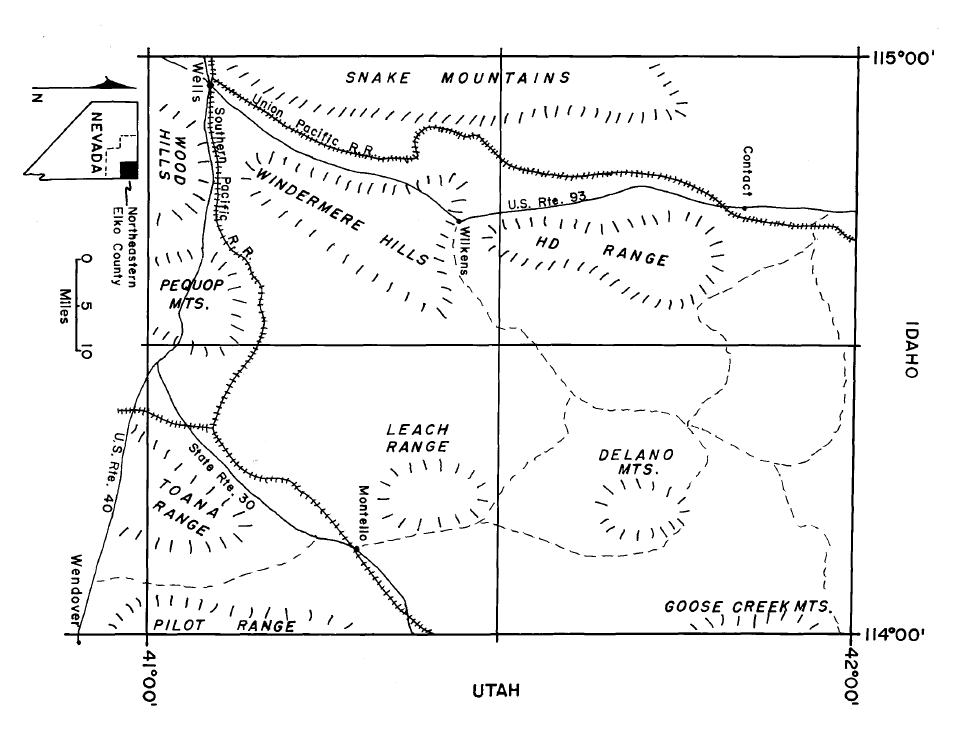
The Delano Mountains Mining District
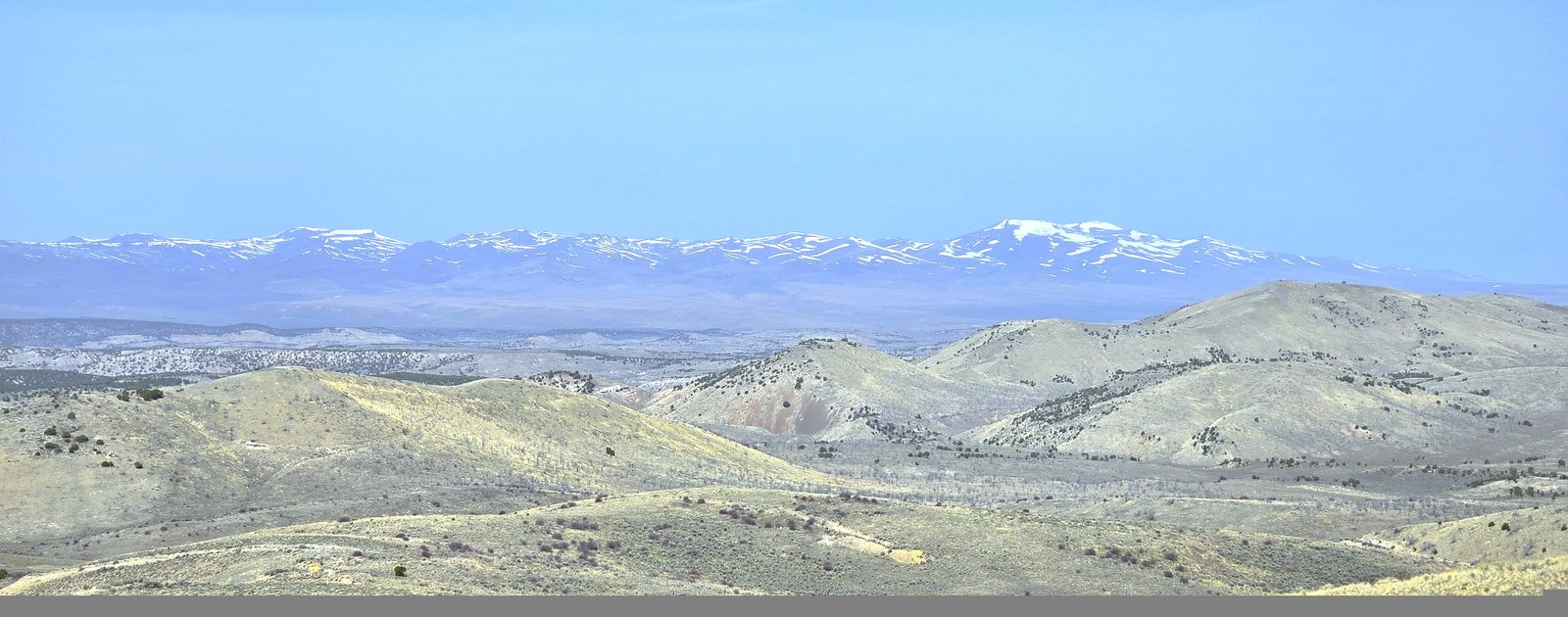
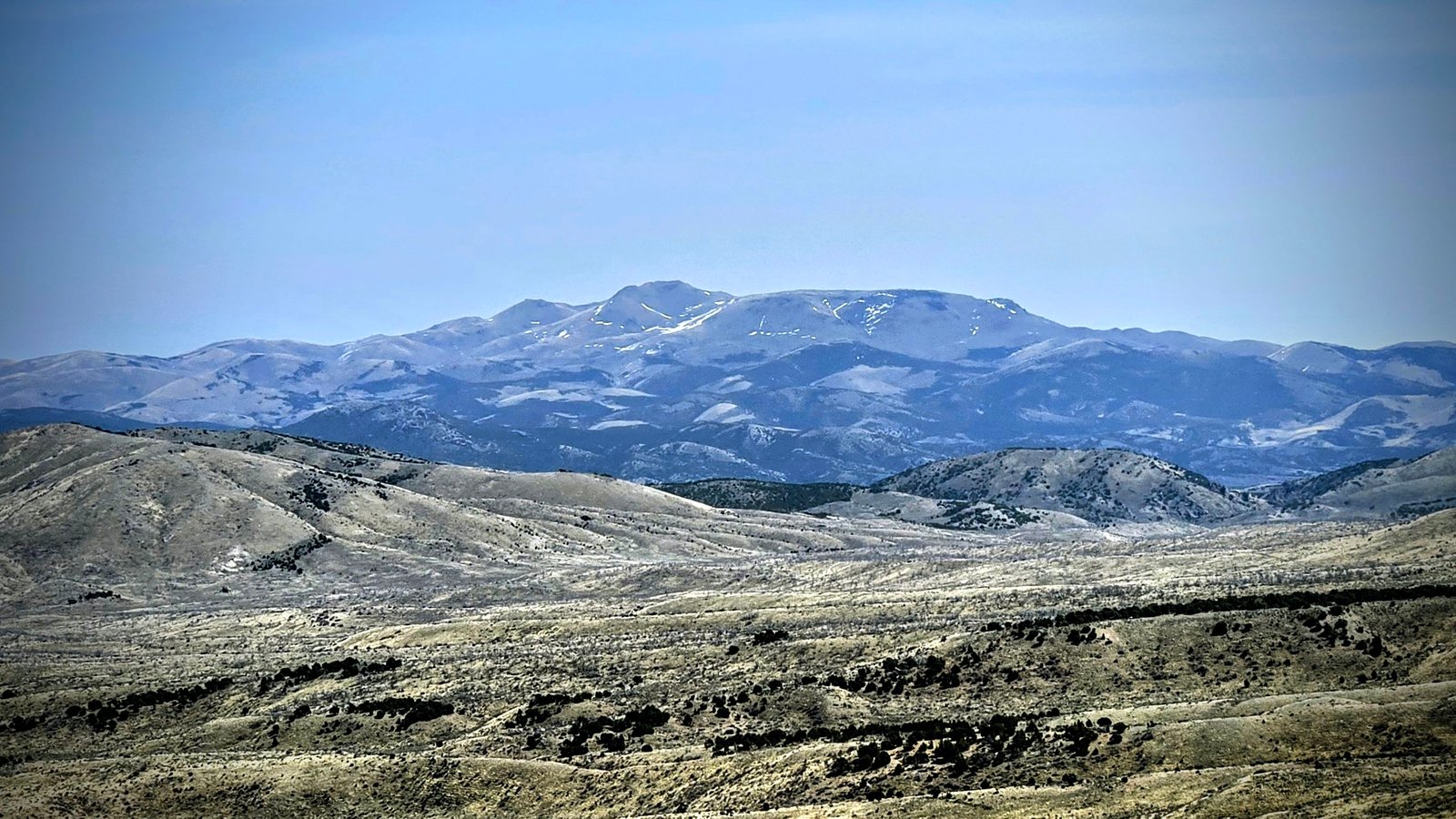
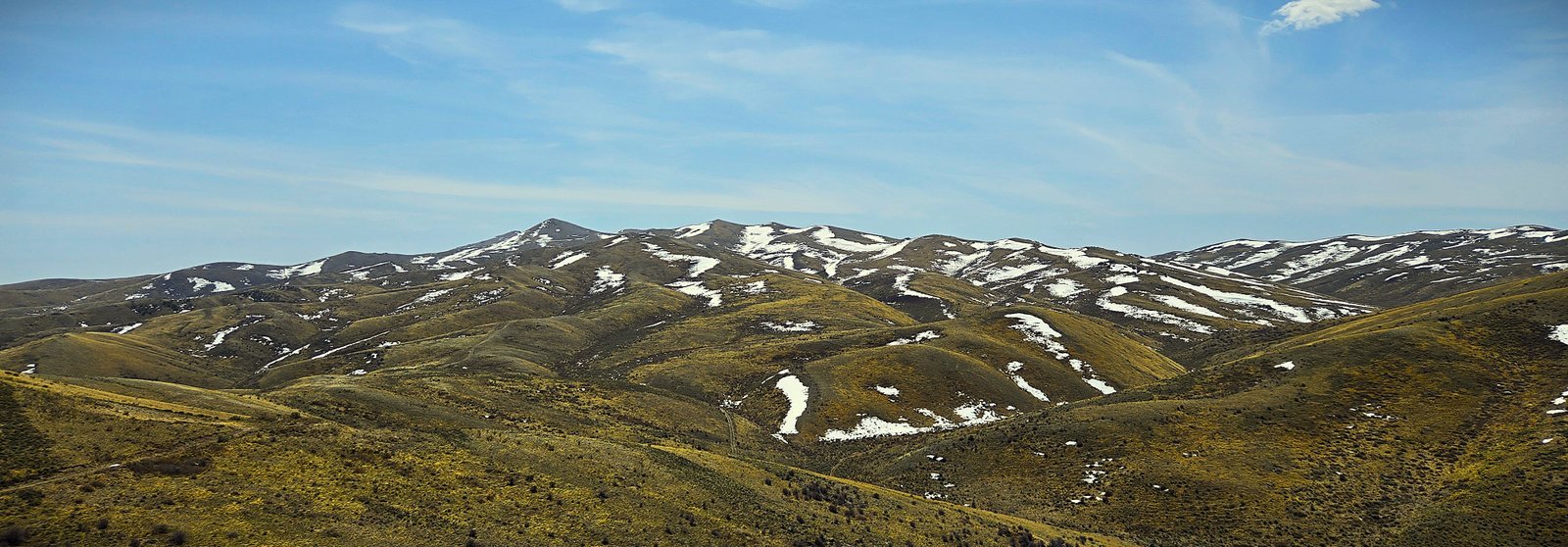
The Delano Mountains mining district has been recognized for more than a century as a structurally complex, carbonate-hosted mineral system with documented silver-lead-zinc mineralization.
Historic mining, academic research, and government synthesis consistently identify favorable carbonate stratigraphy, strong structural preparation, and replacement-style mineralization across the district.
Cleveland-Delano Resources evaluates the project at district scale, reflecting the geological continuity required for durable carbonate replacement systems rather than isolated vein-style targets.
- ~1,000 acres consolidated into a single land package.
- Four historic mine areas unified under one project.
- District-scale carbonate replacement system.
- Large portions of the system remain untested by modern drilling.
Carbonate Replacement System Framework
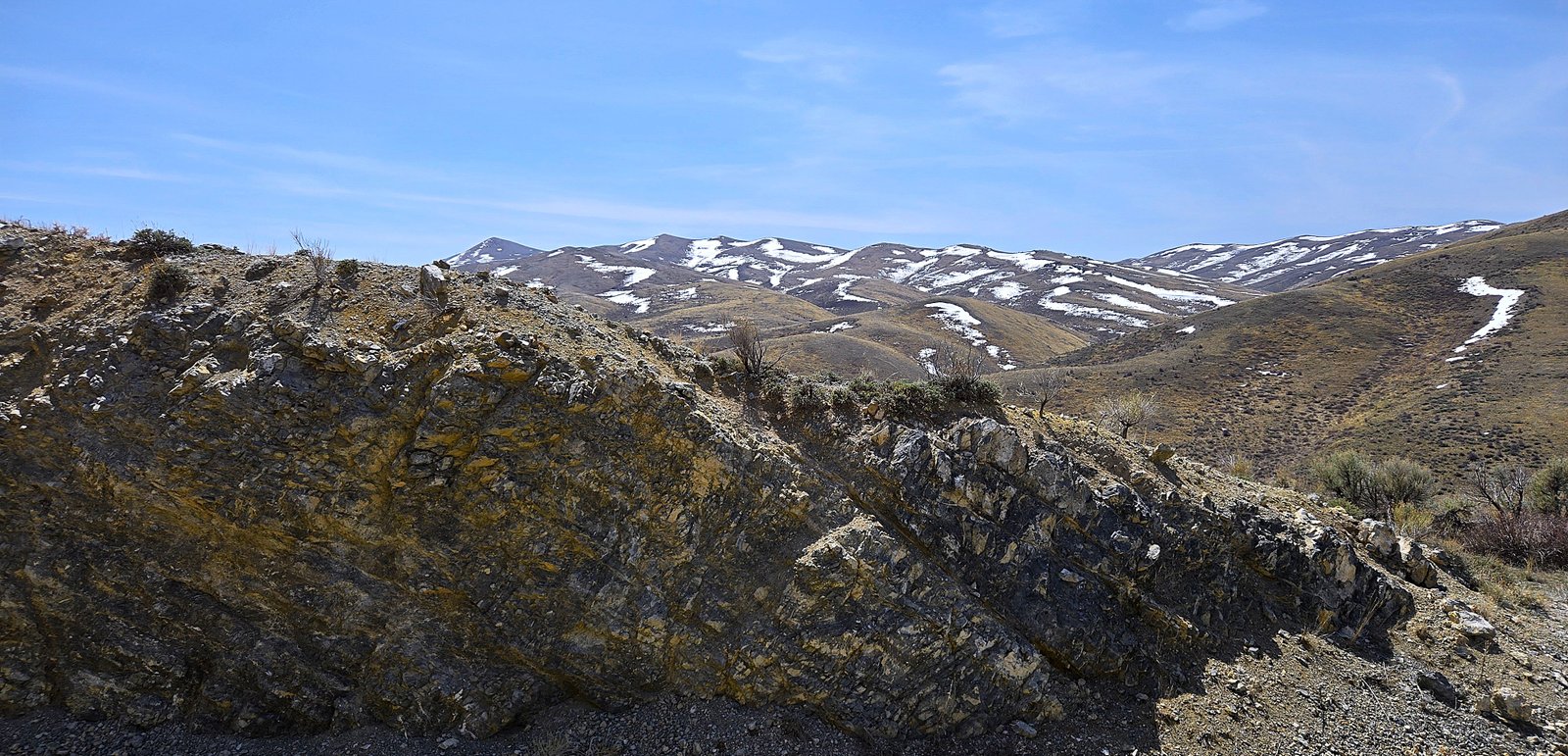
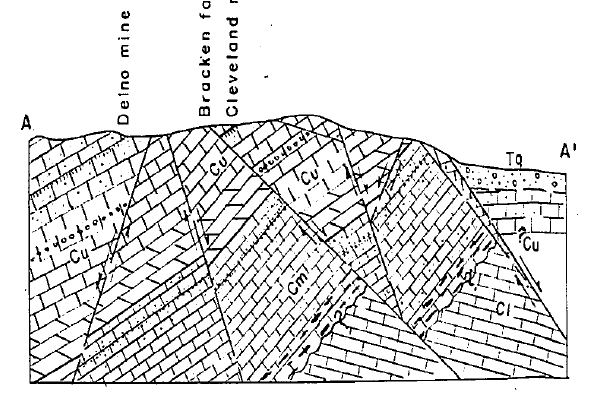
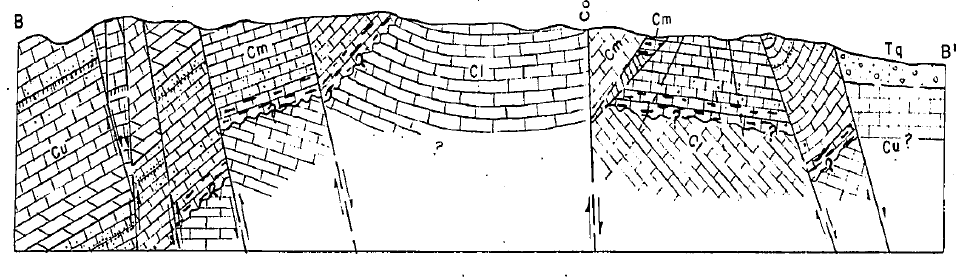
Cleveland-Delano is interpreted as a carbonate replacement system characterized by stratigraphically controlled replacement mineralization within favorable carbonate host rocks.
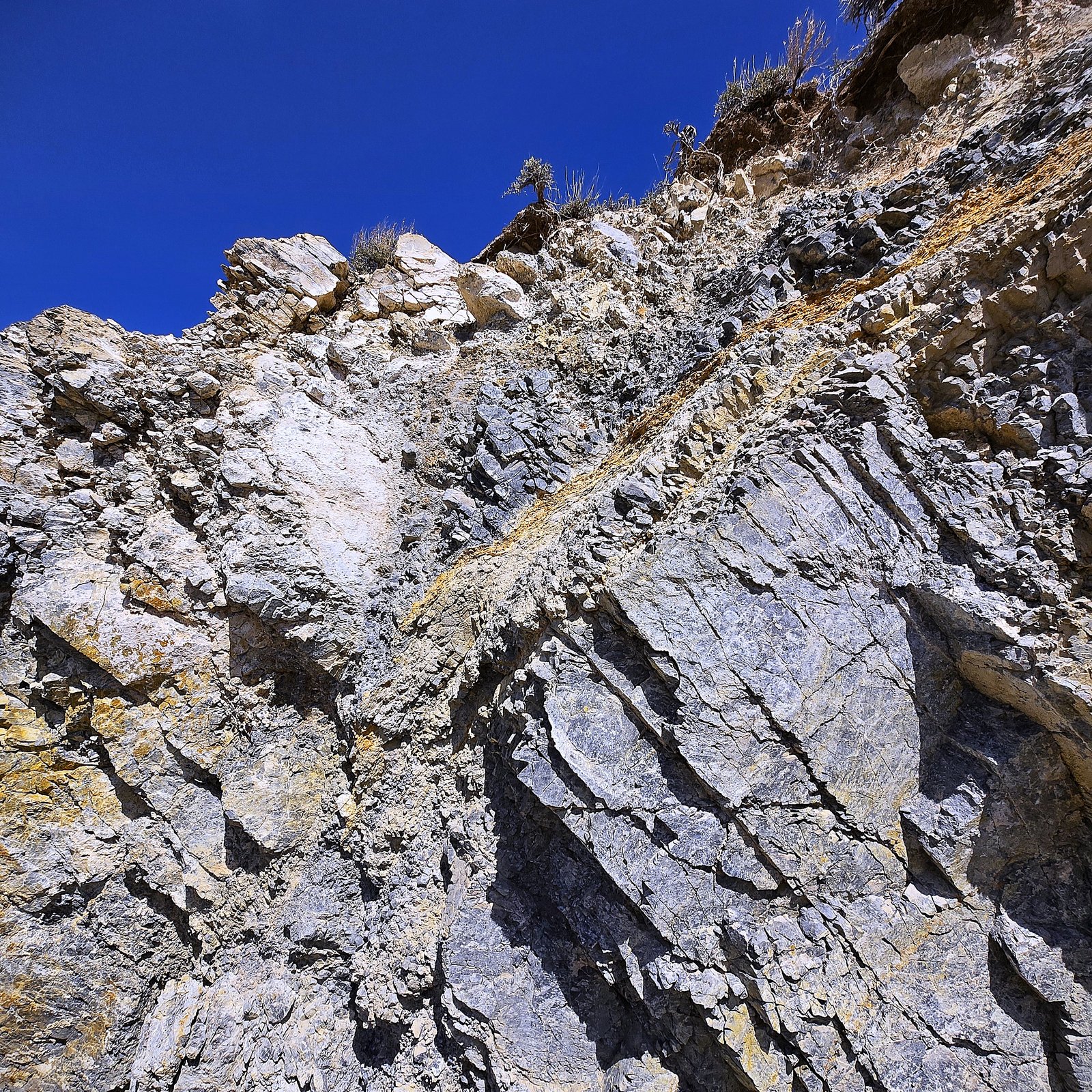
Mineralization is structurally focused, with faults and shear zones providing pathways for hydrothermal fluids and creating conditions for broad zones of replacement rather than narrow vein development.
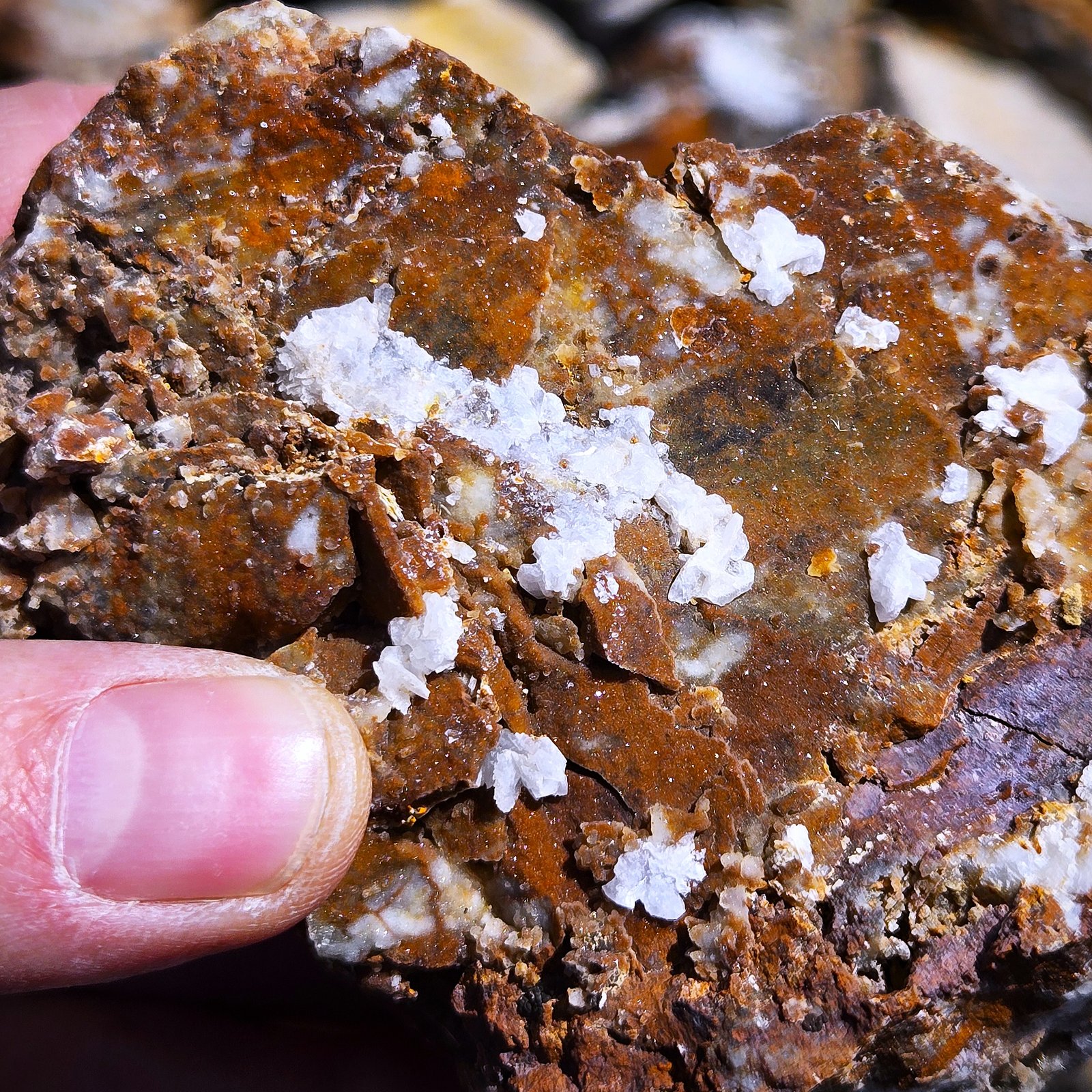
Replacement textures, silica-carbonate alteration, and fault-related mineralization observed at surface and underground are consistent with globally recognized CRD systems.
- Consolidated land position: ~1,000 acres.
- District-scale carbonate replacement system.
- Multiple historic mine areas and replacement horizons.
- Conceptual, order-of-magnitude exploration scenario:
- ~5 million tons.
- ~50 oz/ton silver-equivalent (polymetallic basis).
- ~250 million oz silver-equivalent (conceptual).
“These figures represent a conceptual, exploration-stage scenario derived from historic data, geological interpretation, and district-scale system analogs. They do not constitute
mineral resources or mineral reserves and have not been prepared in accordance with NI 43-101 or other reporting standards. Actual results may differ materially.”
Mineralization & Alteration
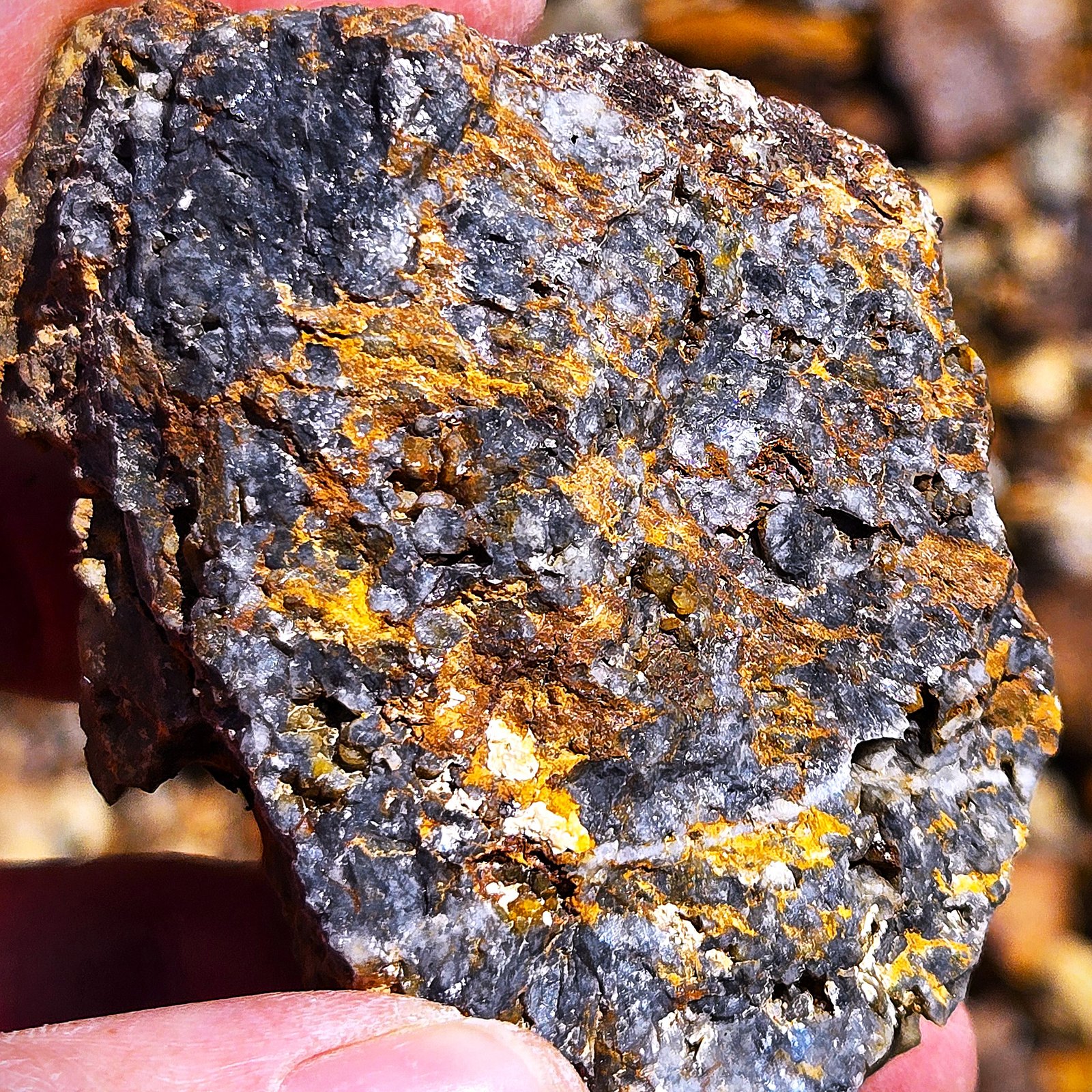
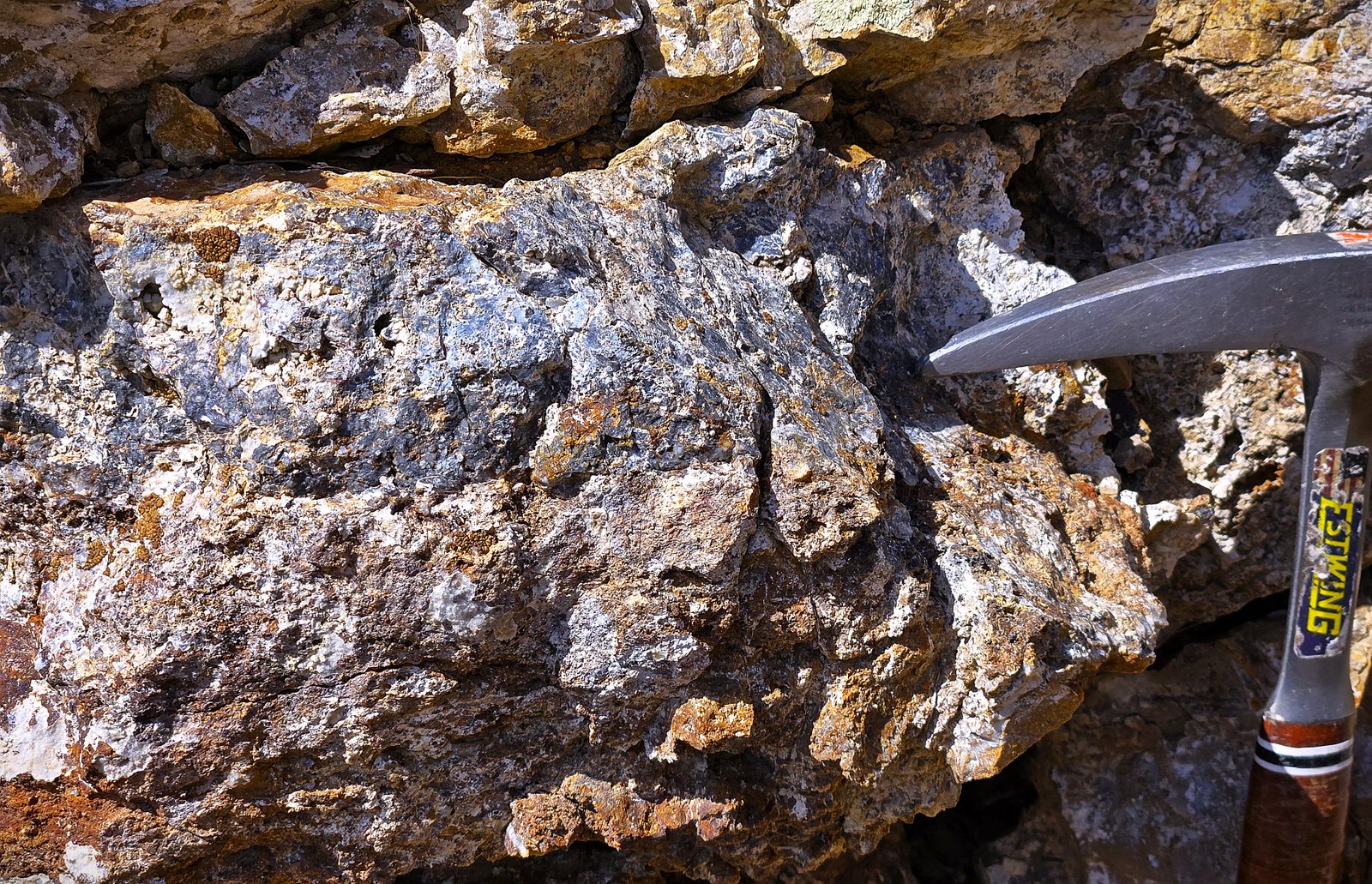
Observed mineralization includes silica-carbonate replacement textures, structurally localized sulfide mineralization, and oxidation products consistent with historic silver-lead-zinc systems.
These features reflect replacement processes operating at district scale, rather than discrete epithermal or vein-hosted mineralization.
Mineralization styles documented historically and observed in the field align with carbonate replacement systems that have supported long-life mining districts worldwide.
- Polymetallic Ag-Pb-Zn replacement mineralization in carbonate host rocks
- Massive to disseminated sulfides with strong structural and stratigraphic control
- Silicification, decalcification, and jasperoid alteration proximal to mineralized zones
- Oxide expressions of sulfide mineralization at surface
- Geochemical signatures consistent with district-scale CRD systems
Historic Workings & Underground Expression
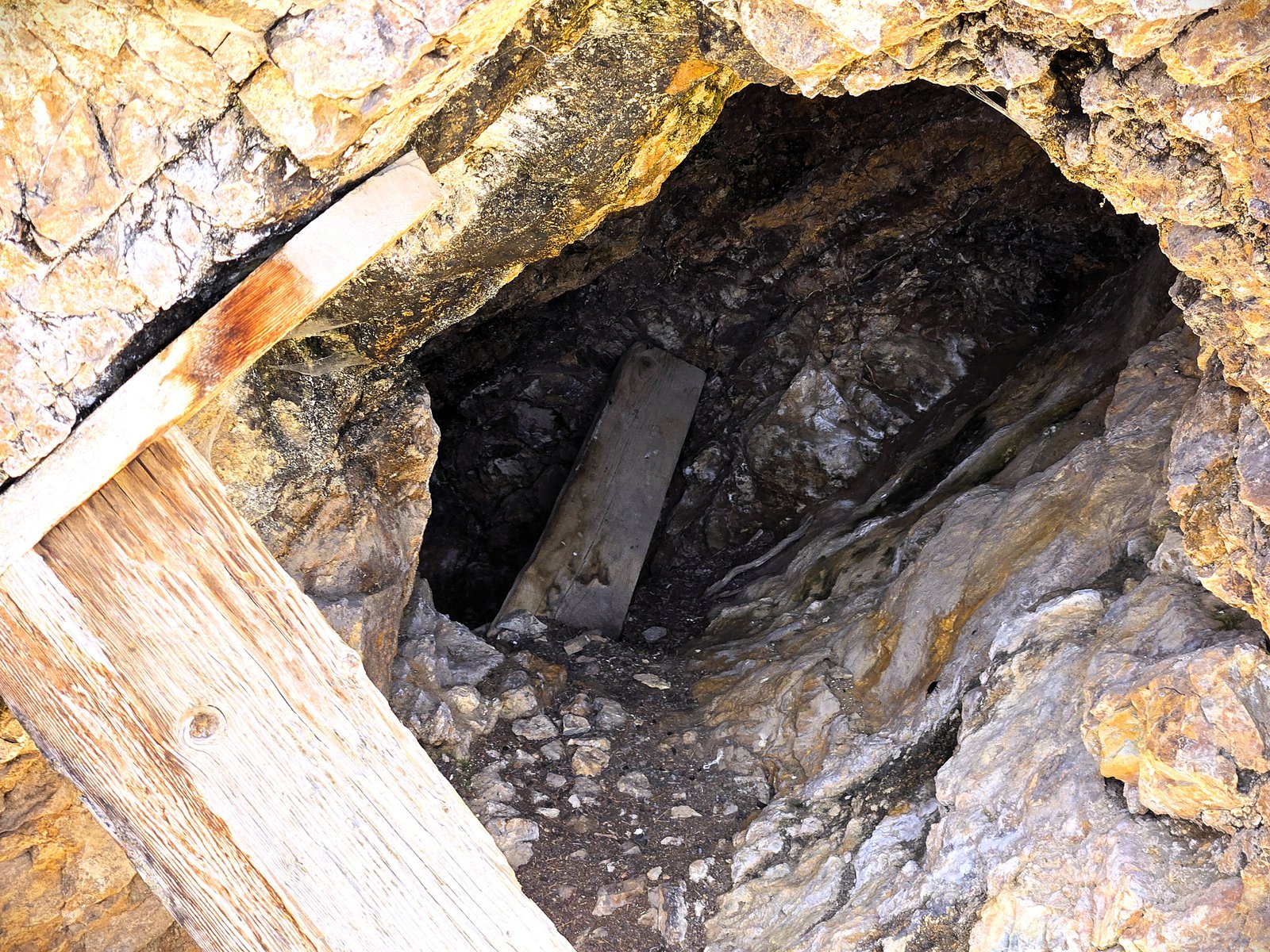
Historic underground development at Cleveland-Delano demonstrates continuity of mineralization along favorable structures and carbonate horizons.
Underground exposures and historic sampling confirm the presence of replacement-style mineralization accessible through conventional mining methods.
Historical production and smelter returns provide third-party validation of recoverable mineralization, while not constituting a modern mineral resource estimate.
Independent Validation
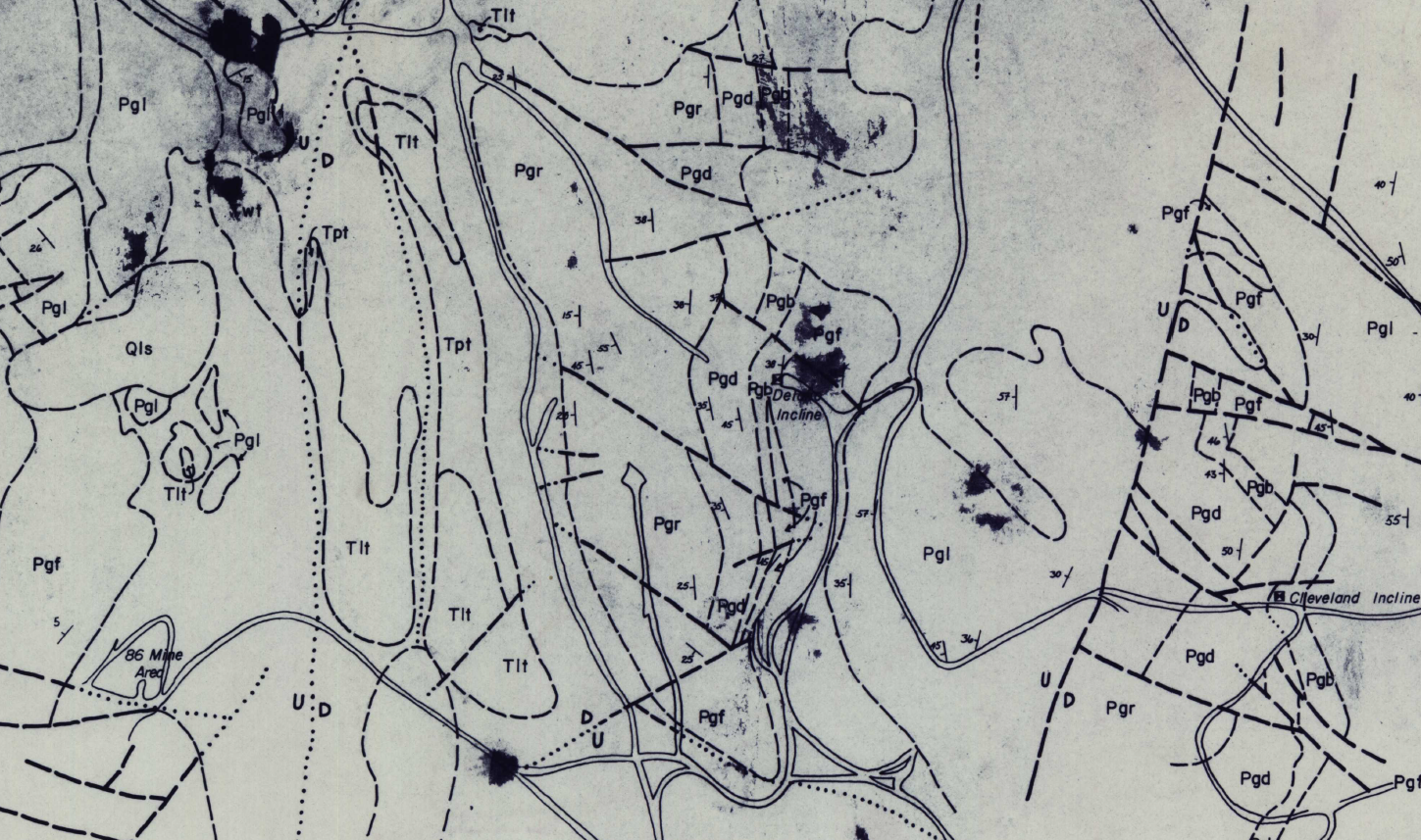
The geological interpretation of Cleveland-Delano is supported by multiple independent sources spanning academic research, government synthesis, and historical operator work.
Early doctoral research established the stratigraphic and structural framework of the district, while later government and operator studies confirmed district-scale continuity and metallurgical viability.
This body of independent work materially de-risks the geological framework underlying the project.
Referenced Historical & Technical Work
- Geology of the Delano Mountains District, PhD Thesis, Olsen, 1960
- Delano-Decker Mining District Report, Nevada Bureau of Mines, 1980
- Delano District, Nevada Bureau of Mines Bulletin, various editions
- Noranda internal technical memoranda and district evaluations (1980s)
- Historic smelter return and shipment records, Delano Mine (early 1900s)
Supporting technical reports and underlying data are available for review by qualified parties in a secure data room.
Project Positioning & Strategy
Cleveland-Delano Resources is advancing a district-scale carbonate replacement system anchored by historic production, consolidated land control, and a modern geological framework.
The project is positioned to evaluate system-scale potential across multiple horizons, rather than advancing a single-target or single-cycle exploration concept.
By integrating historic data, academic research, and contemporary CRD models, Cleveland-Delano is structured to pursue silver-led, polymetallic upside within a long-life district context consistent with institutional exploration standards.
What this project is:
- District-scale carbonate replacement system
- Silver-led polymetallic opportunity
- Historically validated with modern geological reinterpretation
- Designed for staged, system-wide exploration
- Structured for institutional review and advancement
What this project is not:
- A single-hole or short-term discovery play
- A narrow vein or epithermal target
- A standalone silver story divorced from geology
- A near-term production claim
- A promotional resource declaration
Project Videos
Compliance & Next Steps
All information presented is historical or interpretive in nature and provided solely for district-scale geological context. No mineral resources or reserves are stated.
Any future technical disclosure will be completed by qualified persons in accordance with applicable regulations.
Qualified parties may request access to supporting materials for further review on a non-solicitation basis.
Qualified Person Review
Geological interpretation, district-scale targeting, and exploration framework have been reviewed by Mark Travis, CPG, Qualified Person, with experience in carbonate replacement systems and Great Basin exploration.